
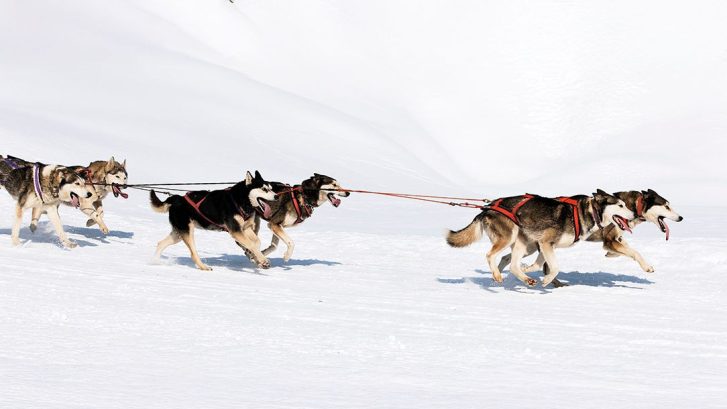
What Can Dog Sled Teams Teach Us About Leadership?

In 2013, I had the opportunity to experience a dog-sled excursion while visiting the Ice Hotel in Sweden. While I was waiting to get onto the sleds for the ride across the frozen river, I observed a very interesting behavior being exhibited by the lead dogs in each of the teams.
Virtually all of the dogs in the pack were leaping and straining against their harnesses; they were barking, yipping, howling and generally making quite a ruckus. However, I noticed that the lead pair at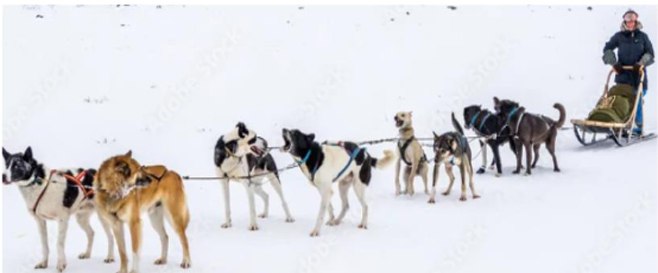 the front of each of the sled teams was quietly sitting very still, keeping a close eye on the mushers. There may have been the occasional woof from one of the lead dogs, yet they were mainly on full alert – silent and attentive, waiting for the signal that it was time to move.
I watched the dogs for many minutes, marveling at this dynamic (click on the video below to view it for yourself). It struck me that this was a great metaphor for leadership in general. The lead dogs were observing and mostly silent despite the fact that all around them the rest of the pack was constantly barking, pulling, and straining on the lines. The lead pair in each team had a single-minded focus: wait for the signal so that they could lead the pack out onto the trail.
Great leaders do something similar. Sometimes in business, people get excited about something and begin to strain and pull, noisily expressing their desire to move in a certain direction or take a specific action, and they want to do it NOW. Sometimes they do it very aggressively.
However, a good leader remains alert and attentive, not overreacting to the chaos all around them. They choose to respond, rather than react. They wait for the right time and the right cue to move forward. They are ready to lead the team in the right direction for optimum success. Good leaders respect the process and provide trustworthy leadership in the work environment. They know the right time to move ahead and the right time to sit still. They know the difference, because they, or someone they trust, have been over these trails many times before. The team may get excited, anxious or even demanding, and still these strong leaders remain steady and calm.
I noticed another thing on that sled ride. When the lead dogs stood up and prepared to respond to the musher’s cue to run, the rest of the pack got quiet and settled down. They knew it was time to get to business. They were ready to pull in the same direction. When a team is pulling in the same direction, following a strong and calm leader who is observing the cues from others or following cues from his/her own experience, the path of the team will be true and sound.
I had the realization that this metaphor really is perfect for business. Although any leader may “bark” from time to time, it is the strong, calm, and confident leader that is best at getting a team to follow. The quality of the leader often determines the performance of the team.
What are some other characteristics and traits that you feel make a great leader or that you have witnessed in a highly effective leader? I would love to hear your thoughts.
Dr. ivan, essa visão que você compartilhou me fez pensar e refletir e como eu tenho agido em minha liderança, me ajudou a entender que preciso trabalhar minha mente e emoções para me comportar como um verdadeiro lider, não somente para os outros mas para mim mesmo.
Such a great article Dr Ivan! Thank you very much for sharing with us.
Lido 22/01/2026
A calma e a confiança é importantíssimo para o líder, mas acredito que a instinto e a visão de futuro é fundamental para inpirar os liderados a segui-lo.